
In India today many young people feel intense parental pressure to follow traditional “success” paths. Surveys find about two-thirds of Punjab teens feel parents push them for higher grades[1], and a recent Karnataka study reported 87% of students facing high parental academic pressure [3]. But strikingly, research shows supportive guidance, not force, builds confident career-deciders. In fact, one Indian study of 13–18-year-olds found higher parental involvement reduced career indecision – helping adolescents feel less doubtful about their future [1]. The authors note that “parental support provides guidance and confidence,” even though the final choice ultimately rests with the child [1]. In other words, engaged parents can buffer uncertainty, while heavy-handed control can backfire [1].
Evidence from psychology backs this up. Caring, encouraging parents give children greater confidence to explore interests, whereas excessive pressure can make teens rebel. For example, educators note that children who “enjoy care and support from their parents” tend to pursue careers that excite them [2]. By contrast, child-psychology studies warn that even “crucial” parental advice can go too far – “too much of interference or advice can often lead a teenager to disengage … from their career options” [2]. A survey of Indian students found 63.5% reporting academic stress and 66% feeling parental pressure for better performance [1]. This stress correlates with anxiety and lower well-being. Another study emphasizes that pressure can hinder autonomy, noting that “over-involvement or pressure could inadvertently hinder adolescents’ autonomy” and drive them away from decision-making [1].
By contrast, mentors and educators across Punjab emphasize nurturing each child’s interests. Dr. Rouble Tuli (an Amritsar-based education strategist) urges parents: “Give [your child] wings with your guidance,” celebrating their abstract dreams rather than boxing them into grades and scores. Likewise, At IXB-Bansal classes pvt. ltd. Amritsar we stress a stress-free learning environment that fosters children’s happiness, resilience and potential, unlocking strengths and building confident futures” [4].
A Student’s Story: Consider a fictionalized example. Rhea, a bright Class 10 student, loved painting but her parents insisted on engineering. Under constant pressure, her grades slipped and she grew anxious. Then her school counselor and a local mentor stepped in. They helped Rhea’s parents listen to her passions and explore options together. With that support, Rhea found balance – she started taking design classes alongside her science studies. Today she excels at engineering with a creative side project, and her parents celebrate both her grades and her happiness. Rhea’s turnaround came not through force, but through open communication and encouragement.
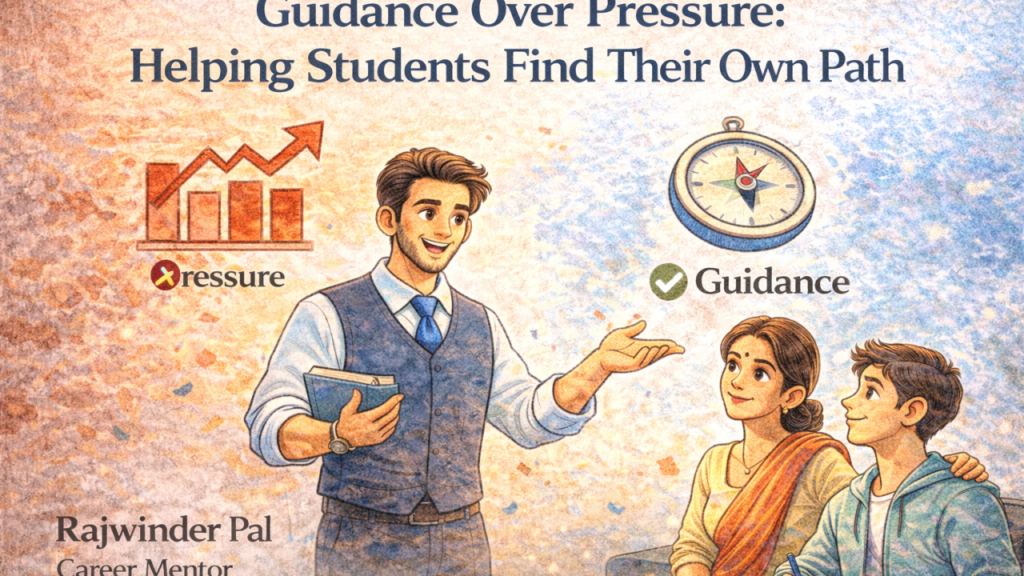
Takeaways for Parents: Research and mentors agree: Guidance wins over pressure. Parents can help by:
· Listening and encouraging. Talk with your child about their interests, and encourage even “abstract dreams”[2]. Children who feel supported report more confidence and motivation.
· Exposing to options. Attend careers fairs or invite mentors to speak with your child. Professional counselling can provide data-driven insight.
· Setting realistic expectations. Encourage effort and learning, not just top scores. Remember that studies show academic stress and parental pressure lead to anxiety [3][4]. Celebrate improvement and passion as much as marks.
Conclusion: Parents shape their children’s confidence more than their transcripts. As Punjab’s leaders , true education is about unlocking potential. By choosing guidance over pressure, families can ensure children pursue careers with confidence and joy. Let every parent become a mentor: ask questions, share information, and support—not coerce—your child’s choices. In doing so you’ll help them flourish, not fade, as they step into their future.
Rajwinder Pal
|Career Mentor| | VP-IXB-Bansal Classes |
References: Cited research from India and Asia (2020–2025) supports these points
1. ijmedph.org
4. ijaresm.com
Leave a Reply